The Happiness Trap Schopenhauer Saw Long Ago
A strange thing happens to many people in their thirties or forties.
They finally achieve the things they once believed would make them happy.
The stable job.
The respectable income.
The comfortable lifestyle.
And yet, something feels strangely unfinished.
The excitement fades faster than expected.
The satisfaction never seems to last.
Soon the mind begins searching again:
Maybe a better job.
Maybe more money.
Maybe a different life entirely.
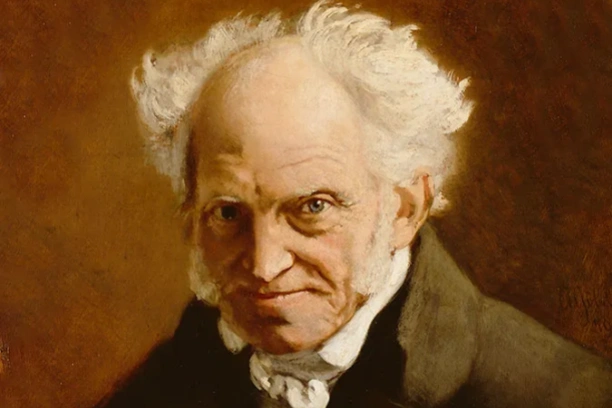
The German philosopher Arthur Schopenhauer noticed this pattern long before modern psychology existed.
He wrote:
“Wealth is like seawater. The more we drink, the thirstier we become.”
What he observed was not a failure of success.
It was a pattern of the human mind.
The Mind Is Not Designed for Contentment
Modern psychology now confirms something philosophers suspected for centuries.
Our brains are built for survival, not satisfaction.
Psychologists call this phenomenon hedonic adaptation.
When something good happens—
a promotion, a new relationship, a financial gain—
our happiness rises briefly.
Then, slowly and almost invisibly, it returns to its previous baseline.
The mind begins searching again.
A slightly bigger house.
A slightly higher salary.
A slightly more impressive life.
And so the cycle continues.
Schopenhauer described this long before psychologists gave it a name:
“Human life swings like a pendulum between pain and boredom.”
When we lack something, we suffer.
When we obtain it, we soon become restless again.
Why Comparison Quietly Steals Joy
Another invisible force shaping human happiness is comparison.
Imagine two people earning the same salary.
One works among colleagues who earn less.
The other works among colleagues who earn more.
Objectively, their situation is identical.
But their emotional experience is completely different.
The Roman philosopher Seneca warned about this long ago:
“If you compare yourself with others, you will never be happy.”
Today, comparison has become a permanent feature of daily life.
Social media constantly exposes us to curated versions of other people’s success.
Vacations.
Achievements.
Perfect relationships.
But what we see is rarely the full story.
We compare our behind-the-scenes reality to someone else’s highlight reel.
And the result is predictable: quiet dissatisfaction.
The Hidden Cost of Endless Desire
Most people believe that wanting more is the engine of progress.
And in many ways, it is.
But when desire becomes endless, it begins to reshape our entire experience of life.
We stop appreciating what we already have.
We stop noticing ordinary moments.
We start living mentally in a future that never quite arrives.
The philosopher Voltaire once wrote:
“True happiness comes only when real needs are fulfilled.”
Many of our desires today are not real needs.
They are psychological signals generated by comparison, insecurity, or social pressure.
The result is a strange paradox:
We live in the most materially comfortable era in history—
yet anxiety and dissatisfaction continue to grow.
Why Simplicity Feels So Rare Today
The ancient philosophers believed happiness had less to do with acquisition and more to do with how we live each day.
Aristotle described happiness not as pleasure, but as living in accordance with virtue and balance.
In simple terms, that meant:
Meaningful work.
Moderate desires.
Healthy relationships.
And a mind capable of appreciating the present.
But modern life often trains us to do the opposite.
We move faster.
We accumulate more.
We measure ourselves constantly.
And slowly, the ability to enjoy ordinary life becomes weaker.
The Only Moment That Truly Exists
Many philosophers eventually arrived at the same insight.
The only place life is actually experienced is the present moment.
Yet most people spend surprisingly little time there.
We replay conversations from the past.
We worry about events that have not yet happened.
We rush through the present as if it were simply a bridge to somewhere better.
Schopenhauer wrote:
“The present moment alone is real and certain.”
When this idea becomes more than a concept—when it becomes an experience—something shifts.
Walking becomes just walking.
Eating becomes just eating.
Working becomes just working.
And the mind, for brief moments, stops chasing something else.
The Quiet Skill of Being Content
Perhaps the greatest wisdom shared by these philosophers is not dramatic or complicated.
It is simply this:
Contentment is a skill.
It is something we practice.
Not by eliminating ambition.
But by learning when enough is enough.
Not by escaping life’s difficulties.
But by seeing them clearly without multiplying them with endless thought.
As Aristotle observed:
“Happiness belongs to those who can enjoy themselves.”
Not those who have the most.
But those who have learned how to live with themselves peacefully.
A Final Reflection
Most of the wisdom we need to live well has already been discovered many times.
By Stoic philosophers.
By Buddhist teachers.
By thinkers like Schopenhauer, Aristotle, and Seneca.
They all pointed toward the same realization:
A meaningful life rarely comes from chasing more.
It comes from understanding the mind that is doing the chasing.
And when that understanding deepens—even slightly—
something surprising happens.
The life we were rushing past
begins to feel more than enough.